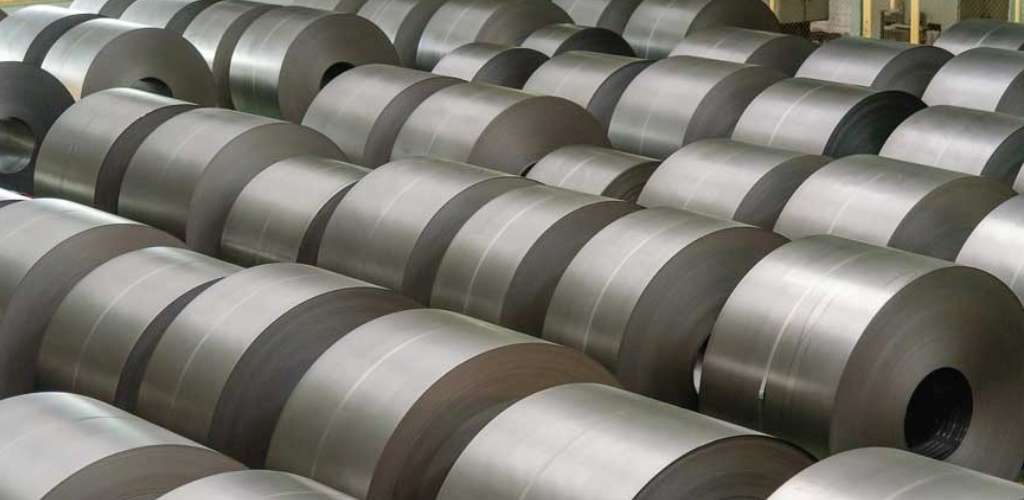

Why Hot Rolled Steel Is Ideal for Transmission Towers
Most people never really think about transmission tower. They drive past them, see them standing in open fields, sometimes across highways, mountains, villages, and cities. They are almost everywhere.
But what many people do not realise is that these towers are actually carrying a very massive responsibility. They support high-voltage power lines, stay exposed to extreme weather throughout the year, and are expected to perform reliably for many decades with very little room for any failure.
And that raises one important question. What kind of material is actually capable of handling all of that? The answer, more often than not, is hot-rolled steel.
There is a reason why transmission tower manufacturers across the world keep relying on it continously. It is strong, practical, cost-effective, and perhaps most importantly, it performs cosistently when the stakes becomes very high.
Transmission Tower Don't Get Easy Working Conditions
A transmission tower does not get to inside any controlled factory environment. It is out there 24/7. It has to go through scorching summers, heavy rain, strong winds, and dust storms. In some regions, even seismic activity happens.
Every single day, these structures are dealing with forces that are dealing with forces that are constantly to bend, shake, or stress them in one way or another. So because of this, the material used for building them has to offer more than just strength on paper only.
It needs durability. It needs consistency. And it needs to remain dependable year after year without any issues. This is where hot-rolled steel becomes quite a natural fit.
Its mechanical properties make it suitable for structural applications that demand long-term performance. When transmission towers are expected to stand tall for 30,40, or even 50 years, material reliability becomes a very big deal indeed.
Excellent Strength-to-Cost Balance
Here is something that people outside the industry do not always think about.
Before a transmission tower reaches any project site, somebody has to manufacture thousands of individual components that go into it. For example:
- Angles
- Bracings
- Plates
- Structural members
Every single piece has to be cut, drilled, fabricated, and assembled in an accurate manner. This is one of the main reasons why HR steel.remains such a preferred choice among manufacturers.
It offers excellent workability during the fabrication process. Manufacturers can process large volumes quite effciently without constantly dealing with material-related issues again and again. And when projects involve hundreds or even thousands of towers, those efficiencies start making a real and significant difference. A small improvement in fabrication can save quite significant time and resources across an entire project easily.
Easy Fabrication for Complex Tower Components
No manufacturers like surprises at all. If one batch of steel behaves differently from the previous batch, production teams immediately start facingmany challenges. More inspections. More adjustments. More wastage. More delay.
That is why consistency is often valued just as much as strength, sometimes even more. High-quality HR steel delivers predicatable performance throughout the entire production process. Fabricationknow what to expect, engineers know how the material will behave, and project temas can work with much greater confidence overall.
This becomes especially important in infrastructure projects wwhere timelines are already very tight, and quality standards are simply non-negotiable.
Better Performance in Challenging Environments
Not all hot-rolled steel is made equally. Manufacturing standards play a rather significant role here, affecting the performance of the material during the fabrication stage.
Flatness, thickness tolerance and consistency of properties are some of the things that may affect your ability to efficiently fabricate with HR steel.
Unevenness in steel is one of the examples of this. It can make cutting, welding and fabrication challenging and result in material loss and higher costs along the way.
In this regard, hot-rolled steel solutions such as AMNS HR Steel have a notable advantage. Thanks to its best-in-class tolerance, guranteed flatness, and consistent properties, AMNS HR Steel makes fabricating with hot-rolled steel a lot easier.
For transmission tower manufactureers, this means no unexpected complications and increased confidence in their end products.
Final Thoughts
Transmission towers might look quite simple from a distance, but the enginnering behind them is anything but simple, really. Every component has a role to play. Every material choice matters a lot.
And while balancing strength, fabrication efficiency, consistency and reliability may prove difficult, HR steel seems to check all the boxes without a problem.
As global energy infrastructure continues to expand, demand for dependable HR steel will continue rising. Thanks to its attention to detail, flatness and consistency and custom solutions, AMNS HR Steel will continue supporting manufacturers in the coming years.
Explore our latest Post
- Market Dynamics: Analyzing The Demand And Supply Of Hot Rolled Steel In India
- Hot Rolled Steel Sheets And Coils: Versatile Industrial Materials
- The Role Of AM/NS Stallion In Improving Modern-Day Agriculture
- The Manufacturing Process Behind Hot Rolled Steel
- Hot Rolled vs Cold Rolled Steel: Understanding the Differences