
Why Ultrasonic Testing Matters in Heavy Plates
When people think sbout steel quality, they mostly think about strength only. Beacuase after all, if a steel plates is strong enough, it should work fine, right? No, that's not the case.
In industries like shipbuilding, offshore structures, heavy engineering, oressure vessels, bridges and large industrial equipment, strength is just one part of the whole picture. What is happening inside the steel matters equally as much as what one can see from outside.
This is exactly where ultrasonic testing comes into the picture.
For manufacturers and project owners who work with heavy-duty steel plate, ultrasonic testing is often one of the most critical quality checks that gets performed before the material even reaches the production stage. This blog will discuss why.
The Problem With Defects You Can't See
Not every defect remains visible to the eye. A steel plate can look completely fine from the outside and still have internal discontinuities, voids, laminations, and segregations-related defects.
The concerning part? Most of these will not get noticed during any visual inspectiona at all.
But once that steel becomes part of a pressure vessel, ship hull, offshore platform or heavy machine structure, those hidden defects start creating serious problems later on. Sometimes much later than expected. And preventing exactly this kind of situation is what ultrasonic testing is designed for.
What is Ultrasonic Testing?
Ultrasonic testing works by sending hig-frequency sound waves through the steel material. When these sound waves meet a defect inside, they bounce back in a different way. This allows inspector to find internal flaws without cutting, damaging or changing the plate in any way.
The material remains fully intact, but wngineers get a much clearer understanding of what is happeining beneath the surface. For industries that depend on steel plates for critical applications, this kind of information becomes very valuable.
Why Heavy Plates Need More Rigorous Inspection
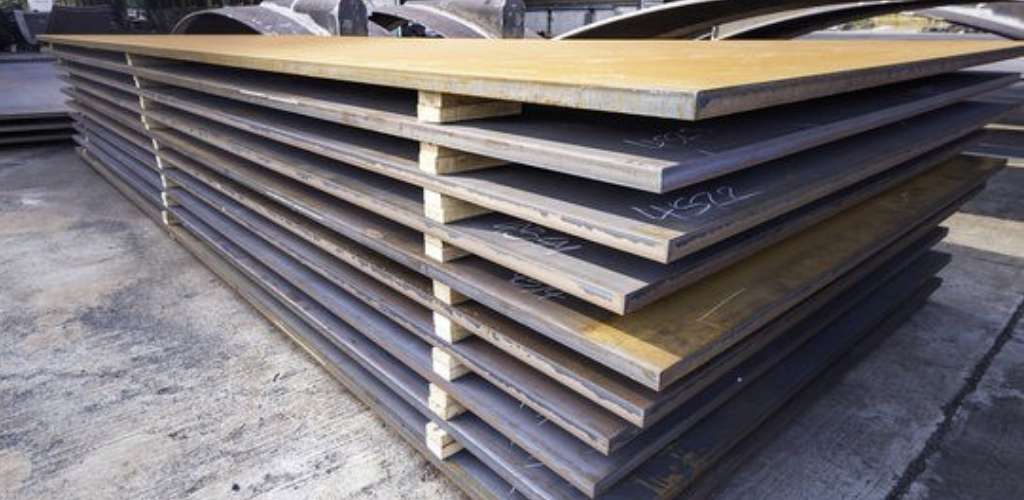
Not every steel product faces the same kind of demands. A thin sheet used in some simple application may not require the same level of inspection as a thick structural plate meant for heavy-duty service. A heavy-duty steel plate is generally expected to handle high loads, continious stress, impact forces, pressure conditions and harsh operating environments all together.
When the stakes are this high, even a small internal defect can slowly become a much bigger problem overtime. This is why ultrasonic testing holds special importance for heavy plates, particularly. The thicker the material gets, the greater the need to verify internal quality throughout the entire plate section properly.
Reliability Starts Long Before Installation
Most project failure do not actually start on site. They start much earlier than that. Sometimes during the design stage. Sometimes during fabrication itself. And sometimes simply because of material quality issues that nobody detected in the first place.
Ultrasonic testing helps remove this before fabrication even starts. manufactures can move ahead with confidence knowing the plate has already been evaluatedfor internal integrity. This leads to better quality assurance, lower risk of failure, improved fabrication confidence, and reduced rework costs overall. For industries where downtime alone can cost millions, this advantage is quite significant.
Better Material Confidence Means Better PRoject Confidence
Consider building an offshore platform. Or a massive storage tank. Or some critical pressure vessel. Such projects may take month or even years to complete fully.
Now imagine finding a material defect after fabrication has already started. Nobody wants to deal with that situation.
This is why engineers and procurement teams often prefer MS steel plate products that meet strict testing and inspection requirements. When ultrasonic testing becomes part of the quality process, everyone involved gains greater confidence in the material being used.
And confidence matters quite a lot when the final structure is supposed to perform properly for several decades.
Quality Control is Becoming More Important Than Ever
Modern industrial projects are getting bigger, more complex and more demanding with time. Safety expectations have gone higher. Regulatory requirements have become stricter. Performance standards keep rising continiously.
Beacuse of all this, buyers are now paying much closer attention to material quality compared to what was happening some years ago. Simply providing steel plates that meet basic specifications is no longer considered enough by most customers.
People oncreasingly want assurance that the material has gone through rigorous inspection processes that verify quality throughout the full plate thickness, Ultrasonic testing helps provide exactly that assurance.
Why Plate Quality and Testing Go Hand in Hand
Testing alone cannot create quality by itself. It can only verify what is already there. The real values comes when advanced testing is combined with advanced manufacturing. This is where suppliers with strong production capabilities actually make a visible difference.
AMNS Heavy Plates are manufactured keeping consistency, quality and performance in mind for demanding industrial applications. Combined with strict inspection and testing practices, AMNS Heavy Plates helps industries source material that is built to meet modern engineering expectations properly.
For application where reliability is truly critical, this combination of manufacturing excellence and quality verification becomes extremely important.
Conclusion:
When it somes to heavy-duty steel plate, what lies beneath the surface can matter just as much as what is visible from the outside. Internal defects may not always be visible to anyone, but they can affect long-term performance, safety and reliability if they remain undetected for heavy plate application today.
Whether it is a bridge, pressure vessel, offshore structure, shipbuilding project or industrial equipment, ultrsonic testing helps make sure that the MS steel plate being used actually meets the high standards that modern industries demand. Because in critical applications, confidence does not from assumptions. It comes from knowing what is truly inside the steel.
FAQs
Customized heavy steel plates are steel plates manufactured according to specific project requirements such as thickness, size, grade, and mechanical properties. These tailored solutions help meet the unique demands of industrial, construction, and engineering applications.
Customized steel plates ensure optimal perforance by matching exact project specifications. They provide better structural integrity, improved efficiency, and enhanced durability, especially in complex or hig-load applications.
Heavy steel plates can be customized in terms of thickness, width, length, material grade, surface treatment, and mechanical properties. This flexibility allows them to be used across a wide range of industries and applications.
Customized heavy steel plates are widely used in industries such as infrastructure development, industrial machinery, shipbuilding, offshore projects, energy generation, and defense manufacturing.
Customized heavy steel plates offer high durability, versatility, and cost-effectiveness. They reduce maintenance costs, improve performance, and ensure long-term reliability in demanding industrial environments.

Explore our latest Post