
How Plate Flatness Improves Laser Cutting Quality and Fabrication Yield
In plate processing, laser cutting often gets discussed in terms of machine power, programming, gas flow, and operator skill. All of that matters, but the plate itself can decide how smoothly the job runs. A plate that does not sit properly on the cutting bed can create small interruptions that show up later as edge variation, fit-up concerns, extra handling, or rework.
For Indian fabricators, this is especially important in heavy plate fabrication, where material value, production time, and downstream accuracy are closely linked. Plate flatness may look like a basic quality point, but it has a direct role in how predictably a plate moves through cutting, inspection, welding, and assembly.
Why Plate Flatness Deserves Attention?
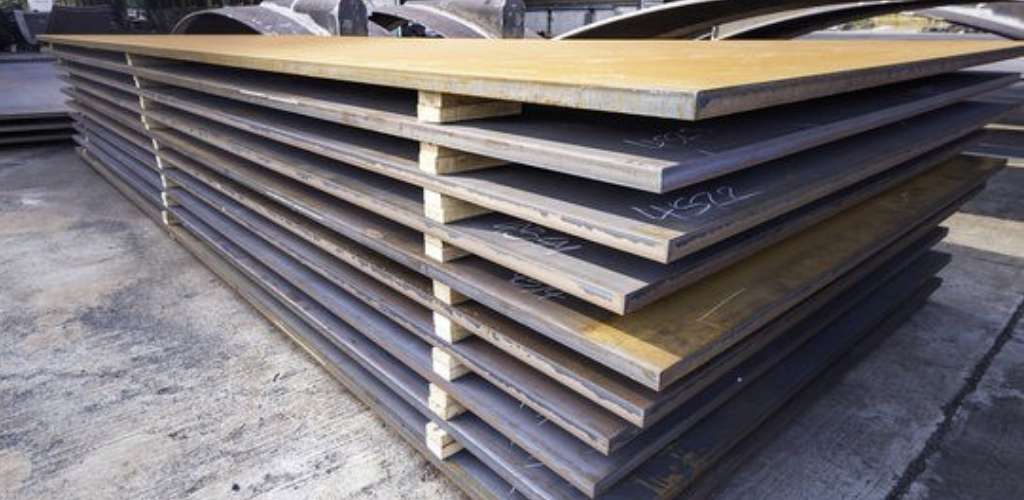
The flatplate provides a more stable starting point for the cutting process. The best environment for laser cutting is one in which the laser cutting head can be maintained at a controlled distance from the plate surface. The machine must adjust to the changes in the plate if it is uneven. This does not always prevent the production process from continuing, but it can make it less consistent.
Flatness matters because it can influence:
- The stability of the cutting path
- Edge appearance after cutting
- Dimensional control of finished parts
- Ease of part removal from the bed.
- The amount of correction needed before the next process
How Plate Shape Affects Laser Cutting
An uneven plate can disturb the cutting process before the operator notices it. When a plate has waviness or uneven surface contact, the cut may not behave the same across the sheet or plate area.
The laser head may need to compensate for height changes, and the operator may need to monitor the job more closely. This can affect both confidence and output quality.
Some common shop-floor concerns include:
- Rougher edges in certain areas.
- More time spent checking cut parts
- Difficulty in maintaining repeatable part quality
- Extra grinding of finishing before fit-up
- Greater chances of a mismatch during assembly.
Flatness and Fabrication Yield
Yield is not only about how many parts are nested on a plate. It is also about how many of those parts are usable without correction. When the plate lies more evenly, the cutting programme has a better chance of running as instended. Operators can plan the job with more confidence, and the parts removed from the bed are more likely to move smoothly to the next stage.
For fabrication teams, better flatness may support:
- Better use of the available plate area
- Fewer interruptions during cutting
- Lower rework dependency
- Cleaner movement from cutting to welding
- More predictable job completion
What Buyers Should Discuss with Suppliers
Flatness should be part of the buying conversation, not a problem discovered after delivery. When selecting AMNS heavy plates, buyers usually discuss grade, thickness, test requirement, and delivery schedules. Flatness and dimensional tolerance should also be reviewed, especially when laser cutting is part of the fabrication route.
A buyer may want to discuss:
- The intended cutting method
- Required tolerance level
- Plate handling and storage needs
- Surface condition expected for fabrication
- Consistency across repeat supply
Searches such as steel plate manufacturer in India, and AMNS steel plates India show that buyers are actively comparing options for demanding industrial use.
Why This Matters for Indian Fabricators
Fabrication teams in India often work with tight delivery schedules and multi-stage production. A plate that cuts cleanly and moves easily to the next process can reduce friction on the shop floor. It can also make planning more dependable for supervisors, quality teams, and project managers.
Flatness is not a replacement for good cutting practice. It works along with proper machine setup, skilled operation, correct storage, and suitable material selection. When all these factors come together, the overall fabrication process beco0mes more controlled.
Conclusion:
Plate flatness is a quiet but important factor in laser cutting quality. It affects how the plate sits, how the cut progresses, how parts are checked, and how smoothly they move into later fabrication stages.
For buyers and fabricators, giving flatness the right attention at the selection stage can support better material use, cleaner processing, and a more dependable fabrication flow.
FAQs
Customized heavy steel plates are steel plates manufactured according to specific project requirements such as thickness, size, grade, and mechanical properties. These tailored solutions help meet the unique demands of industrial, construction, and engineering applications.
Customized steel plates ensure optimal perforance by matching exact project specifications. They provide better structural integrity, improved efficiency, and enhanced durability, especially in complex or hig-load applications.
Heavy steel plates can be customized in terms of thickness, width, length, material grade, surface treatment, and mechanical properties. This flexibility allows them to be used across a wide range of industries and applications.
Customized heavy steel plates are widely used in industries such as infrastructure development, industrial machinery, shipbuilding, offshore projects, energy generation, and defense manufacturing.
Customized heavy steel plates offer high durability, versatility, and cost-effectiveness. They reduce maintenance costs, improve performance, and ensure long-term reliability in demanding industrial environments.

Explore our latest Post